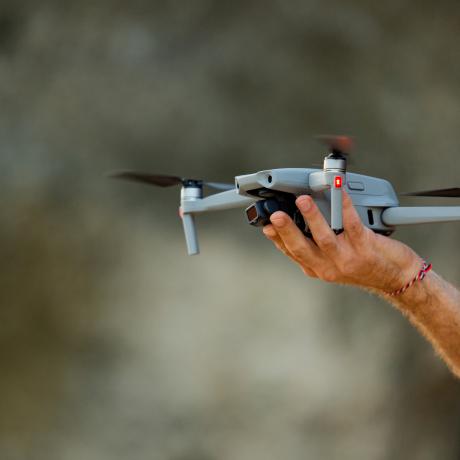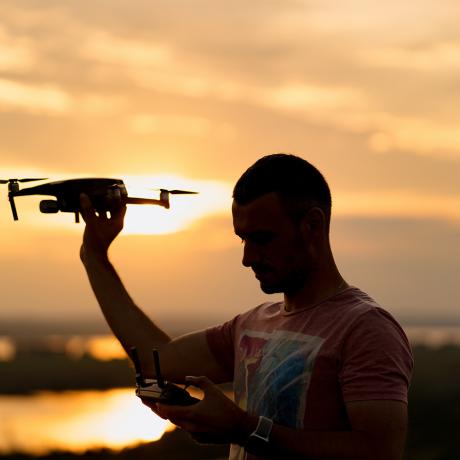
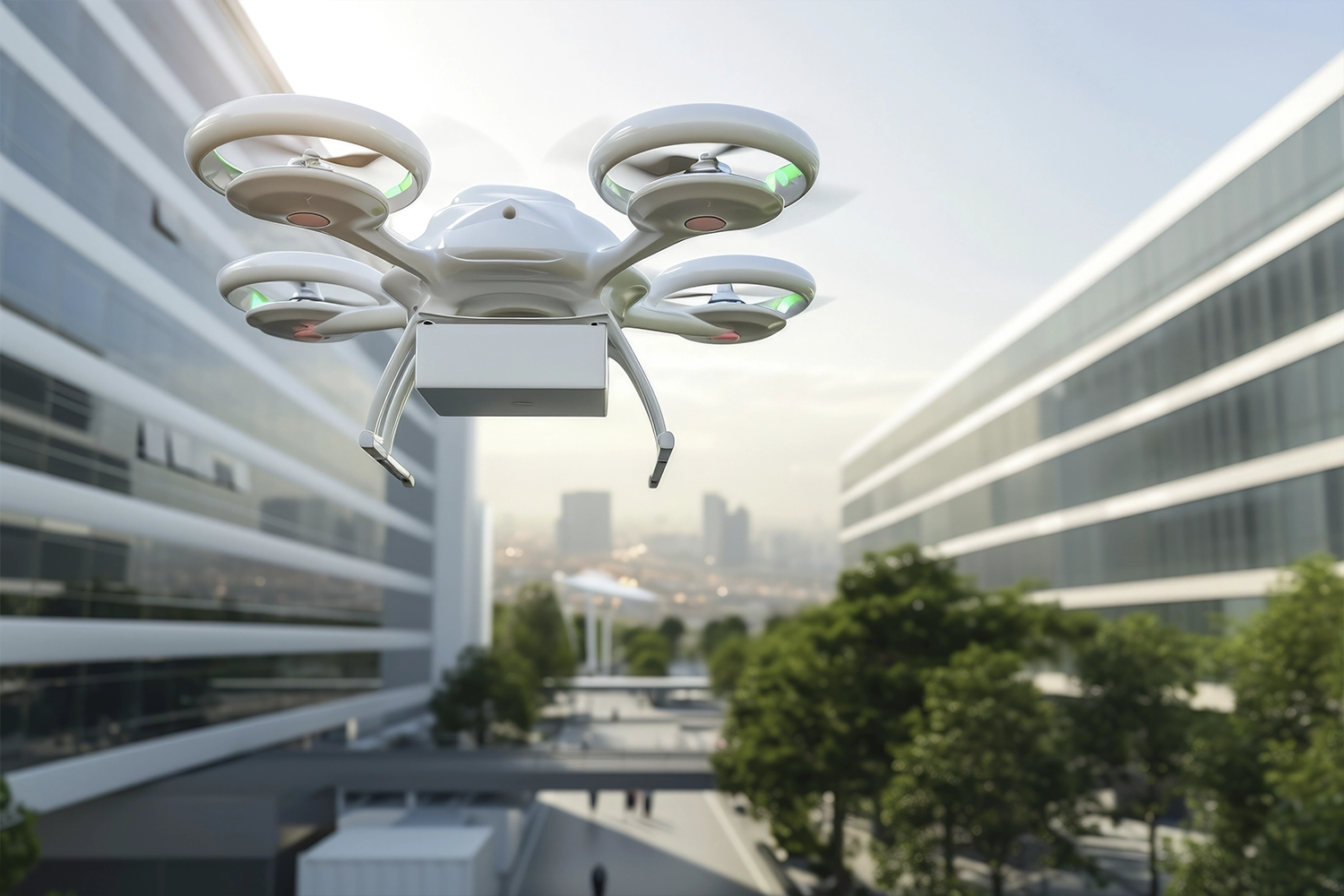
Autonomous Drones with AI & Machine Learning
₹141,600.00
- Course Duration : 60 Days
- Skill level : Beginners
- Module : 8
- Certifications : Yes
The above mentioned price is including 18% GST
Guaranteed safe checkout

Category: Single Courses
Product ID: 39829
Description
Description
A future-focused program that combines drones with artificial intelligence and machine learning. Participants learn autonomous navigation, object detection, and intelligent decision-making using real-world datasets.
The course covers algorithm development, sensor integration, and AI-based mission planning.
Designed for engineers, researchers, and innovators aiming to build next-generation autonomous drone systems.
This course is structured to guide learners from basic concepts of drones to the practical and advanced applications of AI and ML in creating autonomous drone systems.
Module 1: Introduction to Drones and Autonomous Systems
Introduction to Drone Technology
- Types of drones: Multicopters, fixed-wing, VTOL, and hybrid drones
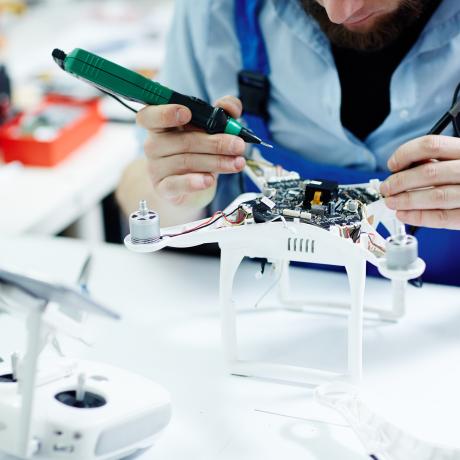
- Key components of a drone: frame, motors, ESCs, flight controller, battery, sensors
Basics of Autonomous Systems
- Understanding autonomy levels: from manual to fully autonomous
- Essential principles of autonomy in drones
Overview of AI and Machine Learning in Robotics
- Key concepts in AI and ML relevant to drones
- How AI and ML drive autonomy
Module 2: Drone Hardware and Sensors for Autonomy
Lesson 2.1: In-Depth Look at Flight Controllers and Control Systems
- Role of flight controllers in drone stability and control
- Understanding PID control for drone stability
Lesson 2.2: Sensors and Data Collection for Autonomous Drones
- Working with GPS, IMUs, LiDAR, cameras, ultrasonic, and IR sensors
- Sensor fusion techniques for robust data
Lesson 2.3: Communication Systems and Protocols
- RC, telemetry, and cellular/Wi-Fi communication
- Real-time data transfer for autonomous operation
Module 3: Foundations of Artificial Intelligence for Drones
Lesson 3.1: Fundamentals of Machine Learning and AI
- Key ML concepts: supervised, unsupervised, and reinforcement learning
- Neural networks and deep learning basics
Lesson 3.2: Data Preprocessing for AI and ML in Drones
- Collecting, cleaning, and labelling drone sensor data
- Feature extraction techniques for aerial data
Lesson 3.3: Model Training and Evaluation for Drone Applications
- Training basic ML models with drone data
- Evaluating model performance and accuracy
Module 4: Computer Vision for Drones
Lesson 4.1: Introduction to Computer Vision Concepts
- Image processing and feature extraction
- Object detection and tracking fundamentals
Lesson 4.2: Deep Learning for Vision-Based Navigation
- Using convolutional neural networks (CNNs) for object recognition
- Semantic segmentation for obstacle avoidance
Lesson 4.3: Vision-Based SLAM (Simultaneous Localization and Mapping)
- Overview of SLAM and its application in drones
- Integrating vision-based SLAM with autonomous navigation
Module 5: Path Planning and Navigation
Lesson 5.1: Path Planning Algorithms
- Overview of A*, Dijkstra’s, and RRT (Rapidly-Exploring Random Tree) algorithms
- Choosing the right path planning approach for different scenarios
Lesson 5.2: Obstacle Detection and Avoidance
- Leveraging AI and ML for real-time obstacle detection
- Using depth sensors and vision-based approaches for obstacle avoidance
Lesson 5.3: GPS-Denied Navigation
- Navigating in GPS-denied environments with computer vision and SLAM
- Integrating inertial sensors and visual data
Module 6: Reinforcement Learning for Autonomous Flight
Lesson 6.1: Basics of Reinforcement Learning (RL)
- Key concepts in RL: rewards, policy, and value functions
- Using RL for decision-making in uncertain environments
Lesson 6.2: Applying Reinforcement Learning to Drone Control
- Developing RL-based controllers for stable flight
- Training agents for specific tasks like following a target or avoiding obstacles
Lesson 6.3: Sim-to-Real Transfer for RL-Based Models
- Using simulators for RL training
- Techniques for transferring RL models from simulation to real-world drones
Module 7: Swarm Drones and Multi-Agent Systems
Lesson 7.1: Introduction to Drone Swarms
- Principles of swarm intelligence and multi-agent coordination
- Applications of drone swarms in various fields
Lesson 7.2: Communication and Coordination in Swarms
- Multi-agent reinforcement learning (MARL) for drone swarms
- Decentralized vs. centralized control in drone swarms
Lesson 7.3: AI-Driven Task Allocation and Coordination
- Using AI for optimal task assignment in drone fleets
- Real-world scenarios: search and rescue, surveying, and mapping
Module 8: Practical Applications and Case Studies
Lesson 8.1: Autonomous Drones in Real-World Scenarios
- Case studies in agriculture, delivery, and disaster response
- Exploring the regulatory and ethical implications
Lesson 8.2: Custom Autonomous Drone Projects
- Building a project from concept to prototype
- Tips on troubleshooting, testing, and refining your drone
Lesson 8.3: The Future of AI and ML in Drones
- Emerging trends in drone autonomy
- Career opportunities and areas for further research
Capstone Project
Final Project: Create an Autonomous Drone Solution
- Design and implement an autonomous drone application
- Utilize AI and ML techniques for navigation, obstacle avoidance, or other autonomous tasks
- Present and evaluate the project with peers or instructors
Delivery Info
- Standard and Express delivery services are available for all items.
- Shipping costs are calculated at the checkout page (after delivery option & destination confirmation).
- Tracking is available for all delivery options.
- Items are delivered during standard business hours.
Reviews (0)
Be the first to review “Autonomous Drones with AI & Machine Learning” Cancel reply


Reviews
There are no reviews yet.