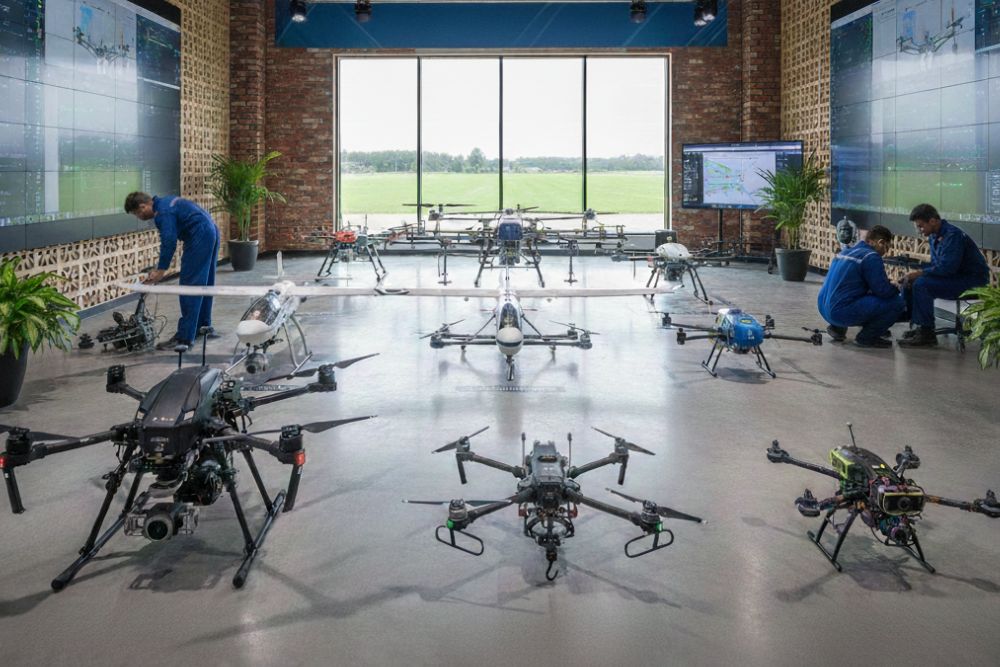
Professional drone training goes far beyond basic flying skills. At Aerophile Academy, trainees are introduced to multiple types of drones designed for real-world applications across industries such as aerial photography, surveying, agriculture, inspection, and defense. Understanding these drone categories is essential for building a successful career as a certified drone pilot.
This guide explains the types of drones used in professional training, their features, and their practical applications.
1. Multi-Rotor Drones
Multi-rotor drones are the most commonly used drones in professional training programs. These include quadcopters, hexacopters, and octocopters.
Key Features:
- Vertical take-off and landing (VTOL)
- High stability and precise control
- Easy to operate for beginners
- Ideal for indoor and outdoor training
Training Applications:
- Basic flight control and maneuvering
- Aerial photography and videography
- Inspection of buildings and towers
At Aerophile Academy, multi-rotor drones form the foundation of hands-on flight training.
2. Fixed-Wing Drones
Fixed-wing drones resemble small airplanes and are widely used for long-distance and endurance operations.
Key Features:
- Longer flight time compared to multi-rotor drones
- Higher speed and wider coverage area
- Requires runway or catapult launch
Training Applications:
- Land surveying and mapping
- Large-area agricultural monitoring
- Infrastructure and corridor mapping
Professional drone training includes fixed-wing drones to prepare pilots for enterprise-level operations.
3. Hybrid (VTOL) Drones
Hybrid drones combine the vertical take-off capability of multi-rotor drones with the endurance of fixed-wing drones.
Key Features:
- Vertical take-off with airplane-style flight
- Efficient battery usage
- Suitable for complex missions
Training Applications:
- Advanced mapping and surveying
- Remote and inaccessible area operations
- Smart city and industrial projects
Aerophile Academy introduces hybrid drones during advanced training modules.
4. Agricultural Spraying Drones
Agricultural drones are purpose-built for precision farming and crop management.
Key Features:
- High payload capacity
- Automated spraying systems
- GPS-enabled precision control
Training Applications:
- Crop spraying and fertilization
- Pest control operations
- Agricultural data analysis
With agriculture becoming a major drone-driven industry, professional training on spraying drones is highly valuable.
5. Camera & Cinematography Drones
Camera drones are used extensively in media, real estate, tourism, and filmmaking.
Key Features:
- High-resolution cameras and gimbals
- Smooth stabilization systems
- Precise movement control
Training Applications:
- Cinematic flight techniques
- Aerial photography composition
- Commercial videography projects
Aerophile Academy ensures pilots learn both technical flying and creative aerial skills.
6. FPV (First-Person View) Drones
FPV drones provide immersive flying experiences and are used for high-speed and precision tasks.
Key Features:
- Real-time video feed through FPV goggles
- High maneuverability
- Requires advanced piloting skills
Training Applications:
- Advanced flight control
- Racing and inspection tasks
- Defense and surveillance simulations
FPV drone training enhances reflexes, situational awareness, and pilot confidence.
7. Mapping & Survey Drones (LiDAR & GIS)
These drones are equipped with advanced sensors for professional data collection.
Key Features:
- LiDAR, thermal, or multispectral sensors
- High-accuracy data output
- Software integration for analysis
Training Applications:
- GIS mapping and 3D modeling
- Infrastructure inspection
- Mining and construction surveys
Aerophile Academy trains pilots to handle both drone hardware and data processing tools.
Why Aerophile Academy Uses Multiple Drone Types
At Aerophile Academy, professional training is designed to match real-world industry requirements. Exposure to multiple drone platforms ensures students:
- Gain hands-on experience across applications
- Understand drone selection for different missions
- Become job-ready with industry-relevant skills
- Meet regulatory and safety standards
Final Thoughts
Understanding the types of drones used in professional training is crucial for anyone aiming to build a long-term career in drone technology. From beginner-friendly multi-rotor drones to advanced LiDAR and FPV systems, Aerophile Academy provides comprehensive training that prepares pilots for today’s and tomorrow’s drone industry.
Ready to become a professional drone pilot?
Enroll at Aerophile Academy and gain hands-on training with industry-grade drones designed for real-world success.